
Urine ACR: What it tells us about your kidneys
Stewart Medicine Talks
A small urine sample.
An early warning.
Your urine ACR test can help find early signs of kidney damage, even when your kidney blood tests look normal.
Dr. Adam Stewart explains what the test means, why we may repeat it, and how we can help protect your kidneys.
- ACR checks for protein leaking into your urine.
- One high result does not tell the whole story.
- Finding a problem early gives us a chance to act.
Watch on YouTube
What the test measures
Think of your kidneys
like a coffee filter.
ACR stands for albumin-to-creatinine ratio. It checks for small amounts of a protein called albumin in your urine.
A good coffee filter keeps the grounds out of your coffee. In a similar way, healthy kidneys keep most albumin in your blood and out of your urine.
If a filter is damaged, grounds can slip through. Kidneys under strain can also let albumin leak through.
ACR helps us spot that protein leak.

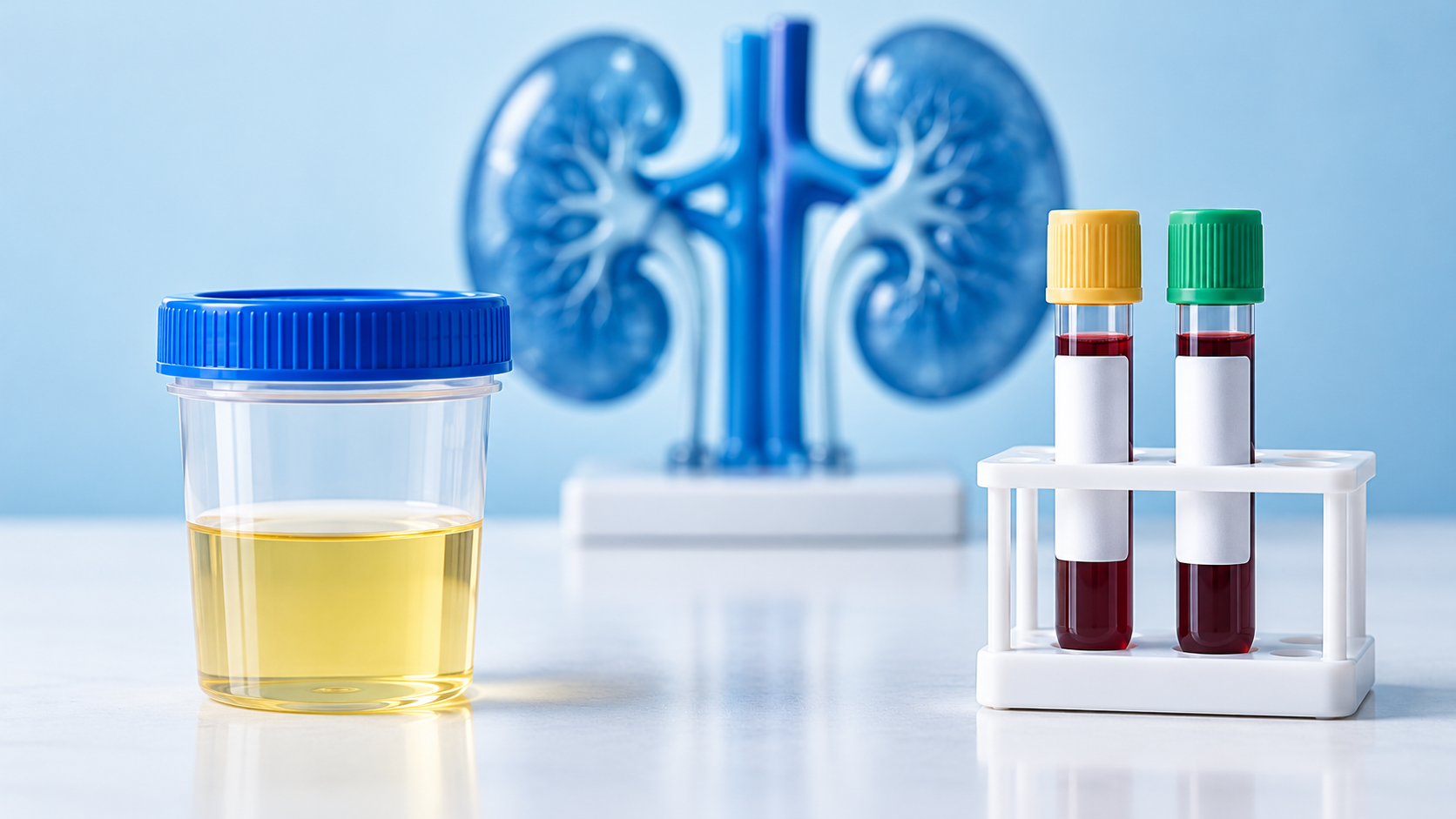
Two tests. Different clues.
Why do I need a urine test if my blood test is normal?
Is protein leaking?
ACR looks for albumin in your urine. A lasting rise can be a sign of kidney damage and a higher risk of kidney problems in the future.
How well are my kidneys filtering?
A blood creatinine test is used to estimate your kidney filtering rate, called eGFR.
Making sense of your results
One high result
may be temporary.
ACR can vary from one sample to the next. Hard exercise, a fever, a urine infection, or very high blood sugar can raise it for a short time.
We often repeat the urine test once or twice over the next three months. Your doctor may check sooner if the result is very high or there are other concerns.
A high ACR does not automatically mean kidney failure. We look at repeat results, your blood tests and your overall health.
What we can do
Help protect your kidneys.
Your plan depends on your results and your health. These are some of the things we discuss at your visits.
-
Keep blood pressure in your target range.
Good blood pressure control helps protect your kidneys. Your doctor will help set a target that is right for you.
-
If you have diabetes, manage your blood sugar.
Work toward your personal blood sugar target. Healthy habits and the right medicines can help.
-
Ask about medicines that protect the kidneys.
Blood pressure medicines called ACE inhibitors or ARBs can reduce protein leakage and help protect the kidneys in people who need them.
SGLT2 inhibitors can also lower the risk of kidney disease getting worse. They may be used in some people with kidney disease, with or without type 2 diabetes. Your doctor will check which medicines suit you.
-
Keep up with follow-up tests.
Repeat urine and blood tests help us see the trend and check how your treatment is working. Ask when your next tests are due.
A few common questions
Why is creatinine part of a urine ACR test?
Your urine can be more watery or more concentrated at different times. Comparing albumin with urine creatinine helps account for that difference. This urine measurement is separate from the blood creatinine test used to estimate eGFR.
How do I give the sample?
Usually, you give a small urine sample in a lab container. A first-morning sample may be preferred. Follow the instructions from your clinic or lab. Tell them if you have a urine infection, fever or menstrual bleeding, or have recently done hard exercise.
Can my kidneys be affected even if I feel well?
Yes. Early kidney disease often causes no symptoms. That is why urine and blood tests matter, especially if you have diabetes, high blood pressure or other risk factors.