
Stewart Medicine · Health Information
Osteoporosis
Keeping your bones strong.
What your bone scan means, how to lower your risk of a break, and when “bone pills” can help.
What is osteoporosis?
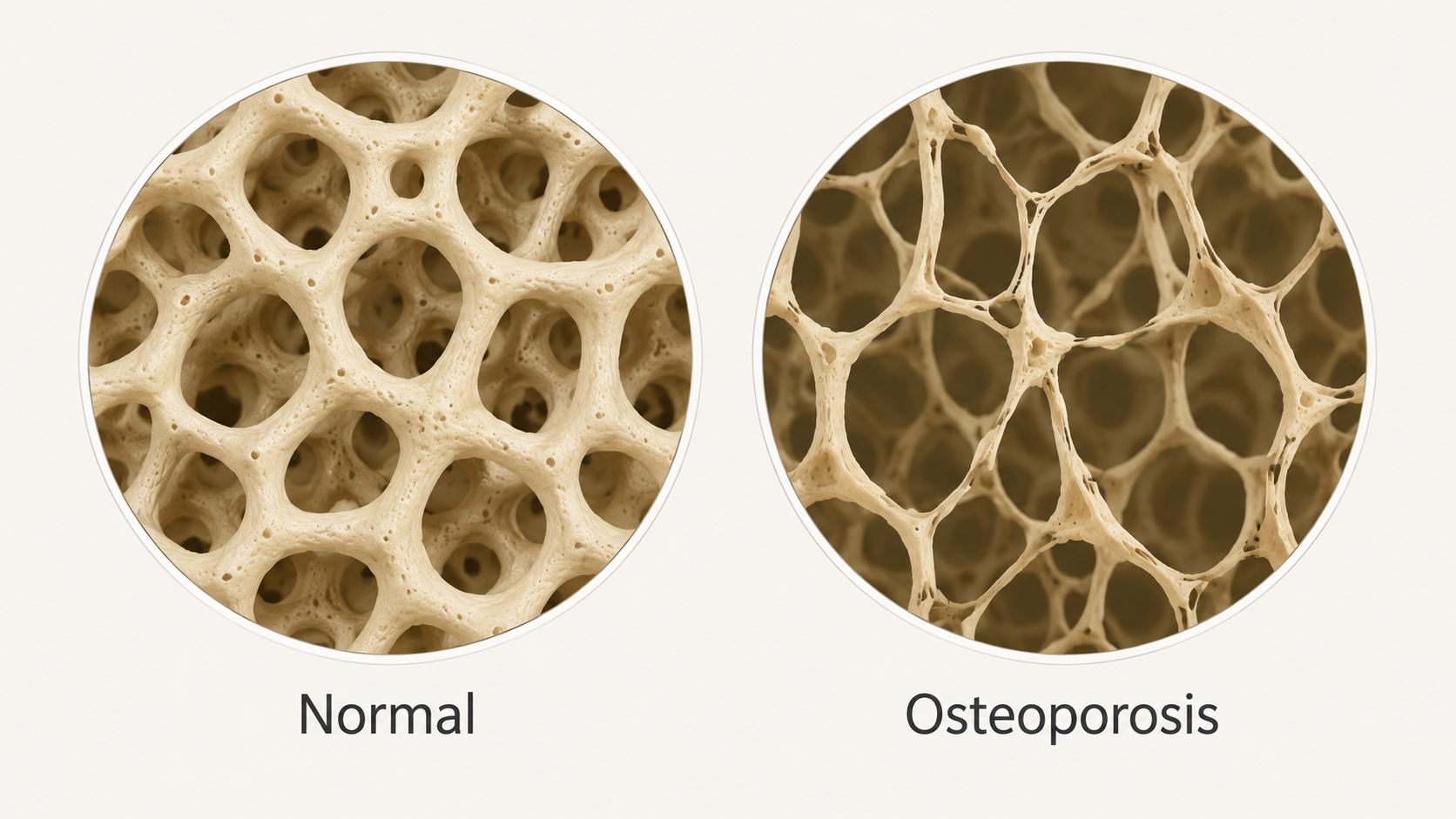
Osteoporosis means your bones have become weak and easier to break. A fracture is a broken bone. Common places for these breaks are the hip, spine, wrist and shoulder.
Your bones can slowly get weaker for years without you feeling it. Often, the first sign is a broken bone after a small fall.
The goal is to prevent that break. Even if you have already broken a bone, treatment can help prevent the next one.
How do we test your bones?
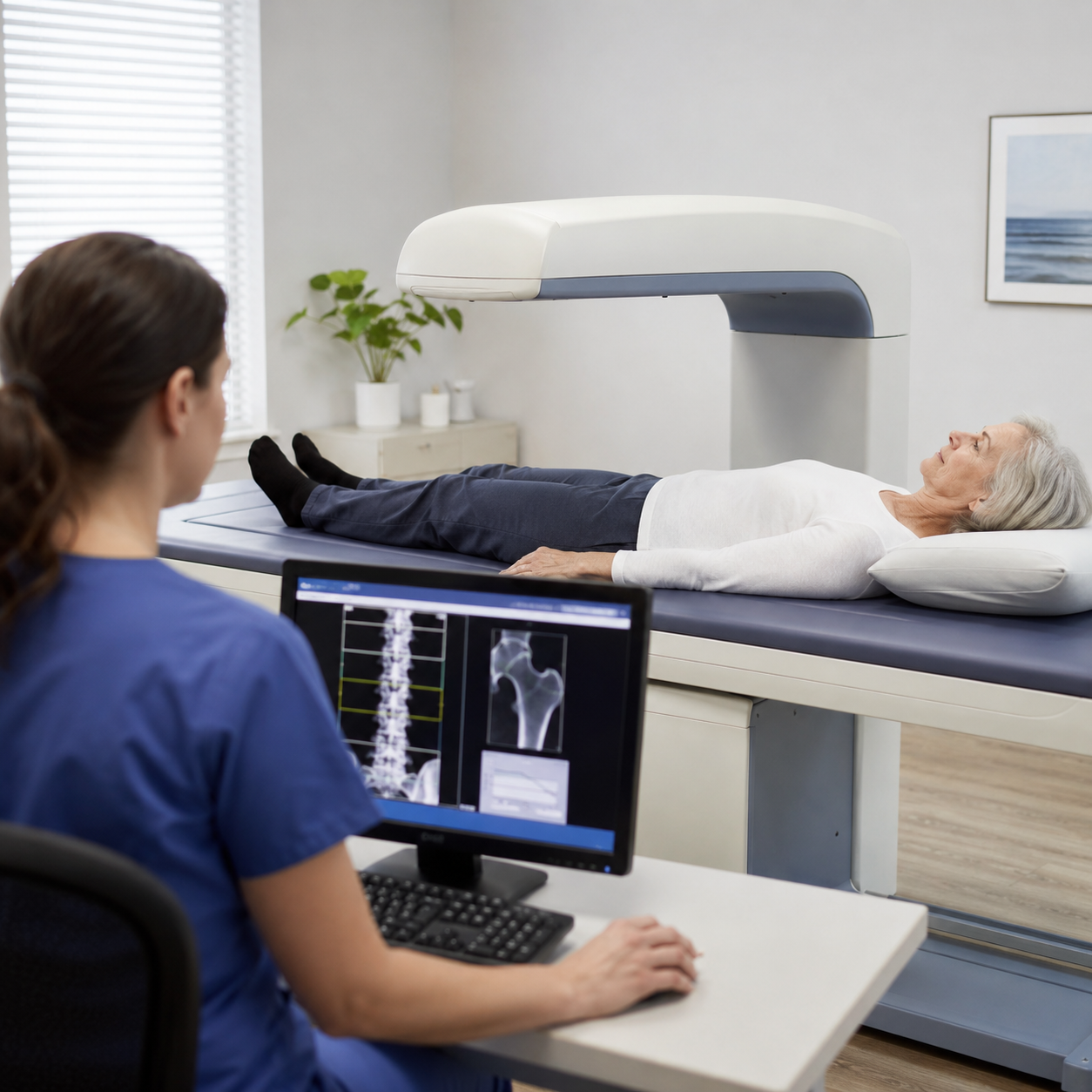
A Bone Mineral Density (BMD) test is a special scan of your hip and lower spine. It tells us how dense your bones are. It does not hurt one bit!
We combine the scan with your age and health history. This includes past broken bones, smoking, and medicines such as prednisone.
Together, these details help us answer the key question:
“What is your chance of a major broken bone in the next 10 years?”
“Major” means a break of the hip, spine, wrist or upper arm near the shoulder. This is an estimate, not a promise about what will happen.
Low, moderate or high risk?
You may see these three risk groups on a bone scan report. They help guide the choice about medicine.
LOW RISK
Medicine is usually not needed.
Start with the bone health basics below. We can check your risk again as you get older or if your health changes.
Less than a 10% risk of having a major fracture in the next 10 years.
MODERATE RISK
A choice to make together.
This is the grey zone. We weigh the likely benefit, side effects and what matters to you. Your choice is part of the plan.
A 10% to less than 20% risk of having a major fracture in the next 10 years.
HIGH RISK
Medicine is recommended.
Bone medicine can lower the chance of a break. Keep doing the bone health basics as well.
A 20% or greater risk of having a major fracture in the next 10 years.
The basics are the same for everyone.
Low, moderate or high risk: these steps help look after your bones. They still matter if you take bone medicine.
Do not smoke.
Smoking weakens bones. If you smoke, quitting is one of the best things you can do for your health. Ask us for help.
Keep alcohol to a minimum.
Heavy drinking can weaken bones. Alcohol can also make you more likely to fall. Less is better.
Do weight-bearing exercise.
This means moving while your legs support your weight. Walking, dancing and climbing stairs are examples. Make these activities part of your day.
Add strength training.
Stronger muscles help support your bones. Try weights, exercise bands, or simple moves such as standing up from a chair. Aim for at least twice a week. Start gently and build up as you get stronger.
If your bones are very weak or you have had a spine fracture, ask which exercises are safe for you.
Help prevent falls.
Practise balance exercises at least twice a week. Clear loose rugs and clutter. Use good lighting and shoes that fit well. Get help with poor balance, dizziness or changes in your sight.
Get enough calcium.
Food is the best place to start. If you get enough from food, you do not need a calcium pill. If you fall short, a supplement can help fill the gap.
What about vitamin D?
Vitamin D pills alone have not been shown to prevent fractures. Large, well-designed studies have found no drop in broken bones in generally healthy adults.
Vitamin D is cheap and usually safe at normal doses, so you can still consider taking it. But we should be clear: it is not a proven way to prevent a broken bone.
Treating a true lack of vitamin D is still important. You may also need it for safe use of certain bone medicines. Your doctor can help you choose a dose. Avoid high doses unless your doctor advises them.
How much calcium do you need?
For adults over 50, the usual daily targets are:
- Women aged 51 and over: 1,200 mg.
- Men aged 51 to 70: 1,000 mg.
- Men aged 71 and over: 1,200 mg.
That is the total from food and any supplements. It is not an extra amount to take in pills.
Good sources include milk, yoghurt, cheese, drinks with added calcium, and canned fish with soft bones.

How do “bone pills” work?
The most common bone pills are called bisphosphonates. Examples are risedronate and alendronate.
Think about your skin. Your body is always getting rid of old skin cells and making new ones.
Your bones are living tissue too. Your body is always taking away old bone and making new bone. With osteoporosis, more bone is lost than replaced.
Bone pills slow down the cells that take away old bone. This helps you keep more bone. Over time, your bones can become denser and stronger, with less chance of a break.
Just one pill, once per WEEK.
This is a common treatment plan. Some prescriptions use a different schedule, so check your label.
Are they easy to take?
Many people take bone pills without trouble. But the type of pill matters, and the directions are important.
Regular bone pills
Regular risedronate and alendronate are taken on an empty stomach. You must wait at least 30 minutes before food, other drinks or other medicines.
These pills can cause heartburn or irritate the food pipe, especially if they are not taken as directed.
Delayed-release risedronate
This version, often labelled “DR”, is taken once a week with breakfast. You do not have to wait to eat. That can make it easier to fit into your day.
Many people tolerate it well. It can still cause heartburn or an upset stomach.
A few simple rules still apply.
- Check whether your pill is regular or delayed-release. Their food instructions are different.
- Swallow it whole with a full glass of plain water.
- Sit or stand upright for at least 30 minutes. Do not lie down. With regular pills, also wait until you have eaten your first meal.
- Take calcium pills, iron and antacids at a different time of day.
- If you get new or worse heartburn, or pain or trouble swallowing, stop the pill and contact your doctor.
Common questions
What is a T-score?
A T-score compares your bone density with that of a healthy young adult. A lower number means less dense bone. A score of −2.5 or lower is in the osteoporosis range for women after menopause and men aged 50 or over.
The T-score is one part of the decision. Canadian guidance recommends medicine for people aged 70 or over with a score this low, and suggests considering it in younger adults covered by the guideline, even if their 10-year risk is below 20%.
Are there serious side effects from bone pills?
Serious side effects are rare. These include poor healing of the jawbone and an unusual break in the thigh bone. Tell your dentist you take bone medicine. Tell your doctor about new, ongoing thigh or groin pain.
For people at high risk of a fracture, the benefit of treatment usually outweighs these rare risks. Your doctor will also check whether kidney or swallowing problems affect which medicine is right for you.
Will I need bone pills forever?
Not always. After about 3 to 6 years of a bisphosphonate, your doctor will review whether to continue or take a planned break. The choice depends on your fracture risk and how treatment is working.
Do not stop on your own. This advice about a planned break does not apply to every type of bone medicine.
What if bone pills do not suit me?
There are other options. These include a medicine given through a vein, or an injection. People with very severe osteoporosis may benefit from medicines that help build bone.
If you take denosumab (Prolia or a similar brand), do not miss, delay or stop injections without a plan from your doctor. Stopping can quickly raise the risk of spine fractures.
How often do I need another bone scan?
As a general guide, about every 5 years, or about every 3 years if your risk is moderate to high.
Your doctor may suggest a different interval based on your treatment and any changes in your health.
Tell your doctor if you break a bone, lose height or have new back pain. You may need to be checked sooner.
More help for healthy bones
For more information, be sure to visit Osteoporosis Canada.
Canadian and Ontario guidance used for this page
This page draws on Canadian and Ontario guidance, clinical trials and evidence reviews, and Canadian medication instructions. Advice about meeting vitamin D needs should be read separately from evidence about whether vitamin D pills prevent fractures. The Osteoporosis Canada guideline mainly applies to women after menopause and men aged 50 and over who live in the community. Other situations may need a different plan.
- Osteoporosis Canada: 2023 guideline executive summary. Treatment thresholds, testing, monitoring and duration of treatment.
- Ontario Osteoporosis Strategy: clinical practice guideline resources. Canadian guidance and its use in Ontario.
- Osteoporosis Canada: fracture risk assessment. Combining bone density with clinical risk factors.
- Osteoporosis Canada: treatments and bisphosphonates. How medicines work, choices and side effects.
- Osteoporosis Canada: calcium and exercise.
- VITAL trial: vitamin D and fractures (2022). Vitamin D alone did not lower fracture risk in generally healthy adults.
- CFPC Tools for Practice: vitamin D and fracture prevention (2024). Evidence review finding no fracture-prevention benefit from vitamin D alone.
- Osteoporosis Canada: July 2026 vitamin D and calcium update. Nutritional guidance and discussion of recent fracture-prevention evidence.
- National Institutes of Health: vitamin D. Safety and the risks of excessive doses.
- Actonel and Actonel DR: Canadian patient medication information (PDF). Formulation-specific dosing and safety instructions.